

Summary: Lifespan is the number of years you live. Healthspan is the number of those years you spend active, independent, and able to do what you love. A 2024 study of 183 countries found the US has the widest gap between the two, at 12.4 years. Protecting your muscles, joints, and mobility is one of the most practical ways to narrow it.
Table of Contents
- Lifespan vs. Healthspan: What’s the Difference?
- Why the Gap Between Lifespan and Healthspan Keeps Growing
- Physical Capacity: The Part of Healthspan You Can Feel
- From Reactive Care to a Proactive Strategy
- How Our Team Helps You Preserve Physical Capacity
- Don’t Just Add Years. Make Them Count.
- Frequently Asked Questions
This Thanksgiving, think about the moments that make the day worth it. Getting down on the floor with your grandchildren. Traveling to see family. A round of golf on Friday morning, or a run to work off the pie. None of those depend on how many birthdays you have. They depend on whether your body can still do what you ask of it.
That is the real story behind lifespan vs. healthspan. In this guide, our team at Tyrance Orthopedics & Sports Medicine explains what healthspan means, why the gap between the two keeps growing, and how protecting your musculoskeletal health helps you keep doing what you love for longer.
Lifespan vs. Healthspan: What’s the Difference?
Lifespan measures how long you live. Healthspan measures how long you live well, which a 2024 study published in JAMA Network Open describes as the years lived in good health. Two people can reach the same age with very different healthspans, and the difference usually shows up first in how well they move.
| Lifespan | Healthspan | |
|---|---|---|
| What it measures | Total years lived | Years lived in good health |
| The question it answers | How long will I live? | How well will I live during those years? |
| What shapes it | Genetics, medical care, and avoiding fatal disease | Strength, mobility, joint health, metabolic health, sleep, and recovery |
| How it shows up day to day | A number on the calendar | Climbing stairs, lifting a grandchild, playing 18 holes |
Adding fuller years means treating strength and mobility as health measures worth protecting, not things that simply fade with age. We introduced this idea in our guide to the five pillars of health. Our clinical approach is guided by The BioMastery™ Philosophy.
Why the Gap Between Lifespan and Healthspan Keeps Growing
People are living longer, but not necessarily healthier. That study analyzed World Health Organization data from 183 countries and found the average gap between lifespan and healthspan reached 9.6 years. The United States had the largest gap of any country, at 12.4 years.
The same study found that in the US, musculoskeletal diseases were among the leading contributors to years lived with disability. In practical terms, bones, joints, muscles, and tendons are a big part of why so many people live longer but do less. That makes musculoskeletal health one of the areas where paying attention early matters most.
Physical Capacity: The Part of Healthspan You Can Feel
Physical capacity is your body’s ability to meet the demands you place on it: lifting, carrying, climbing, balancing, swinging, and recovering. It is the part of healthspan you notice every day, and it depends on muscle strength, joint health, tendon and ligament resilience, balance, and endurance working together.
| What you want to keep doing | The capacity it depends on |
|---|---|
| Playing on the floor with your grandchildren | Hip and knee mobility, plus the leg strength to get back up |
| Traveling with family | Grip and shoulder strength for luggage, endurance for long walks |
| A round of golf | Shoulder and hip rotation, trunk control, and balance |
| Running or brisk walking | Knee, ankle, and tendon resilience, plus cardiovascular endurance |
| Living independently | Strength to climb stairs, carry groceries, and rise from a chair |
According to NIH News in Health, strength exercises can help with activities such as carrying groceries or lifting grandchildren, and the same guidance recommends four types of exercise for older adults: endurance, strength, balance, and flexibility.
Strength is also a useful health signal. In the PURE study, published in The Lancet, researchers followed nearly 140,000 adults in 17 countries and found that every 5 kg drop in grip strength was associated with a 16% higher risk of death from any cause. Grip strength is not a goal by itself, but it shows how closely muscle strength tracks with long-term health.

From Reactive Care to a Proactive Strategy
Most people think about their joints only when something hurts. A proactive approach flips that: you protect strength and mobility before pain forces the issue, and you deal with small problems early. It is the same mindset athletes use to stay in the game.
An athlete’s approach to health comes down to three habits. Know your starting point, meaning how your joints, strength, and movement are doing right now. Make a focused change, such as adding regular strength and balance work or addressing a shoulder that keeps nagging you. Then check again to see whether it worked, and adjust.
If you already train, our guide on how to strengthen tendons and ligaments covers how to prepare connective tissue for the loads you put on it, and our article on staying strong as an athlete after 40 explains how training and recovery change with age.
When to talk to our team: Pain that returns during the same activity, a joint that swells or feels unstable, stiffness that limits how far you can turn or reach, or an injury that hasn’t settled are all reasons to have our team at Tyrance Orthopedics & Sports Medicine take a look before it costs you more time doing what you love.
How Our Team Helps You Preserve Physical Capacity
Traditional orthopedics treats the injury. Integrative orthopedics treats the person. Our goal is to help you move freely and stay active, with non-operative and operative options when they fit, and to address problems early before they limit what you love doing.
Our sports medicine team diagnoses and treats injuries to the shoulders, knees, elbows, and ankles, and our rehabilitation focuses on helping patients regain strength, mobility, and function after an injury. For tendon, ligament, and joint problems, our regenerative medicine program includes options such as platelet-rich plasma (PRP) and bone marrow aspirate concentrate (BMAC), which use your body’s own platelets or bone marrow and aim to support natural tissue healing in joints, tendons, and ligaments.
Regulatory note: PRP and BMAC are not currently FDA-approved for treating specific orthopedic conditions, but they are legally available in Florida. Research on these therapies is ongoing, and results vary by individual.
This work sits within Pillar II of The BioMastery™ Philosophy, Movement & Structural Longevity, which treats musculoskeletal performance as a driver of healthspan through muscle mass preservation, tendon and ligament capacity, bone density and load adaptation, joint mechanics, VO₂ max and performance markers, and functional strength. Our upcoming Human Performance service will add personalized functional motion analysis to identify muscle imbalances, helping you optimize training, prevent injury, and build structural longevity.
Don’t Just Add Years. Make Them Count.
Lifespan tells you how long you live. Healthspan tells you how much of that life you get to enjoy on your own terms. This Thanksgiving, the people at your table are a good reason to protect the strength and mobility that let you show up for them, this year and for many more.
Take the first step toward lifelong mobility. Request a consultation with our team at Tyrance Orthopedics & Sports Medicine.
Request a ConsultationFrequently Asked Questions
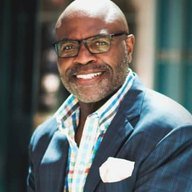
Patrick Tyrance, MD
An orthopedic surgeon and former NCAA Academic All-American linebacker and NFL draft pick. Having competed at the highest level, he understands what it takes to get patients back to what they love — with a focus on regenerative, minimally invasive care.
- Practice: Delray Beach, FL
- Profile: About Dr. Tyrance
- LinkedIn: Patrick Tyrance, MD
- [1]Garmany and Terzic, global healthspan-lifespan gaps among 183 WHO member states, JAMA Netw Open (2024). pmc.ncbi.nlm.nih.gov/articles/PMC11635540JAMA Netw Open
- [2]NIH News in Health, You’re Never Too Old: Keep Active as You Age. newsinhealth.nih.gov/node/1986NIH
- [3]Leong et al., prognostic value of grip strength (PURE study), Lancet 2015. pubmed.ncbi.nlm.nih.gov/25982160Lancet