
Summary: Aging athletes can stay strong and competitive after 40 by training smarter, not simply less. Muscles take longer to recover with age, so the priorities shift to strength training at least two days a week, planned recovery, mobility work, and gradual increases in load. When joint or tendon pain keeps returning, an evaluation with the team at Tyrance Orthopedics & Sports Medicine can help identify what is behind the pain.
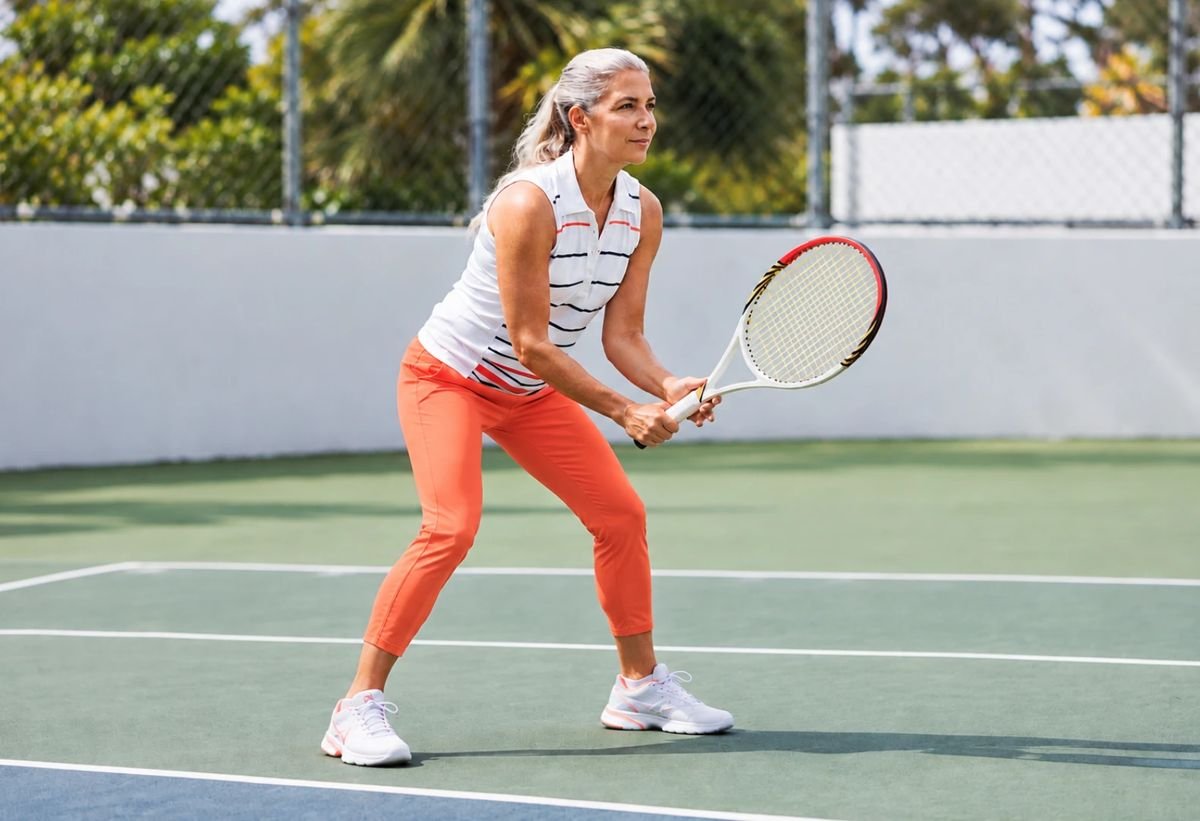
Turning 40 does not end a competitive career. Tennis and pickleball regulars, golfers, runners, and riders keep competing well into their 50s and beyond. What changes is the margin for error: the tournament weekend that once cost a day of soreness can now linger much longer.
This guide explains what changes in the body of aging athletes, which injuries show up most often, how to train so you stay strong and competitive, and when joint pain after exercise is worth an orthopedic evaluation.
What Changes in the Body After 40?
After 40, muscle power, recovery speed, and tissue resilience change gradually, even in people who have trained their whole lives. Aging athletes can still perform at a high level, but tendons, joints, and muscles need more deliberate loading and more recovery between hard sessions than they did at 25.
A clinical review of masters athletes published in Sports Health found that older athletes’ muscles reach the same level of fatigue as younger athletes’ muscles but are slower to recover, and that declines in muscle performance can begin in the early-to-late 30s. The same review recommends that masters athletes combine moderate aerobic exercise with resistance and flexibility training.
| Change | What you may notice | Training response |
|---|---|---|
| Muscle power and mass | Less explosiveness on sprints, jumps, and serves | Strength training at least two days a week |
| Recovery time | Soreness that lasts longer after hard sessions | More space between high-intensity days |
| Tendon and ligament tolerance | Stiffness or aching at the elbow, shoulder, knee, or heel after a jump in training | Gradual increases in volume and intensity |
| Joint cartilage | Joint pain after exercise, often in knees, hips, or shoulders | A mix of impact and low-impact training, plus early evaluation of persistent pain |
Common Injuries in Aging Athletes
The injuries that sideline athletes over 40 are usually overuse and soft-tissue problems rather than dramatic collisions. Tendons, rotator cuffs, menisci, and ligaments absorb years of repetitive load, so a sudden jump in training or one awkward movement can turn an irritated structure into an injury.
Our sports medicine team regularly evaluates these injuries in active adults. Many start as a nagging ache that athletes play through.
| Area | Common injuries | Sports where it often shows up |
|---|---|---|
| Shoulder | Rotator cuff tears, shoulder tendonitis and bursitis | Tennis, pickleball, golf, swimming, volleyball |
| Elbow | Tennis elbow (lateral epicondylitis) | Tennis, pickleball, golf |
| Knee | Meniscal tears, patellar tendonitis, ACL tears | Pickleball, basketball, soccer, running |
| Ankle | Ankle sprains | Court sports, trail running |
| Thigh | Hamstring strains | Sprinting, soccer, tennis |
How to Stay Strong and Competitive After 40
Staying competitive after 40 comes down to four habits: lift consistently, respect recovery, prepare your joints before you play, and build load gradually. None of these require giving up your sport. They change how you train around it so your body can keep absorbing the demands of competition.
Make Strength Training Non-Negotiable
Weight training over 40 is one of the most practical ways to protect muscle and the joints it supports. The CDC’s physical activity guidelines for adults call for muscle-strengthening activity on at least two days a week that works all major muscle groups, in addition to 150 minutes of moderate aerobic activity each week. Compound lifts, single-leg exercises, and slow lowering phases build the strength your tendons and joints rely on.
Plan Recovery Like a Training Session
Because recovery slows with age, hard days need easier days around them. Many masters athletes alternate high-intensity sessions with technique work, low-impact cardio such as cycling or swimming, or full rest.
Warm Up and Keep Your Mobility
A dynamic warm-up that moves each joint through the range your sport demands prepares tissue for load. Short daily mobility work for the hips, shoulders, and upper back keeps stride and swing mechanics efficient.
Increase Load Gradually
Many overuse injuries follow a spike, such as a new league or a sudden jump in mileage. Raising volume in small steps and cross-training to spread the load is central to injury prevention for athletes at any age. Our guide on building resilience against injury covers these principles in more detail.
Joint Pain After Exercise: When to Get Evaluated
Mild soreness that fades within a day or two is a normal response to training. Joint pain after exercise that keeps returning, worsens with each session, or changes how you move deserves a closer look, because it can point to a tendon, cartilage, or ligament problem that is easier to manage when identified early.
When to get evaluated: Pain that lasts more than a few days after activity, swelling, catching, or locking in a joint, weakness when lifting your arm or pushing off, pain at night or at rest, or an injury that made you stop playing right away. Any of these is a good reason to schedule an evaluation with the team at Tyrance Orthopedics & Sports Medicine instead of waiting to see if it settles.
How Our Sports Medicine Team Helps Aging Athletes
At Tyrance Orthopedics & Sports Medicine, our team focuses on sports-related injuries, injury management, and rehabilitation. For aging athletes, that means a diagnosis built around your sport and goals, and a plan that may include one or more of these options:
- Regenerative medicine (PRP): Platelet-rich plasma (PRP) therapy uses a concentrate of platelets from your own blood to support the body’s natural healing response in tendons, ligaments, and joints.
- Shockwave therapy: A non-surgical option for stubborn tendon and soft-tissue pain that uses the body’s intrinsic repair mechanisms to help alleviate pain and promote healing. Learn more on our pain management page.
- IV therapy: Our BioMastery™ IV infusions include an athletic recovery protocol for active patients managing training and competition load, used as support rather than a cure.
- Sports medicine expertise: Care is led by Patrick Tyrance, MD, an orthopedic surgeon and former NCAA Academic All-American linebacker and NFL draft pick. When surgery is the right answer, minimally invasive arthroscopic techniques are part of our care.
Regulatory note: PRP is not FDA-approved for any specific orthopedic condition. The FDA has cleared systems that prepare PRP, and using it as an in-office injection is considered off-label, as a review in the Journal of Knee Surgery explains. In Florida, PRP is offered legally with required disclosures. IV vitamin and nutrient infusions are not FDA-approved to treat any medical condition. Results vary by patient.
Keep Competing After 40
Aging athletes do not have to choose between staying competitive and staying healthy. Consistent strength training, planned recovery, gradual progressions, and early attention to pain help your body keep up with your goals.
If an ache is starting to limit your game, request an appointment with the team at Tyrance Orthopedics & Sports Medicine and get a plan built around your sport.
Request an AppointmentFrequently Asked Questions

Patrick Tyrance, MD
An orthopedic surgeon and former NCAA Academic All-American linebacker and NFL draft pick. Having competed at the highest level, he understands what it takes to get patients back to what they love — with a focus on regenerative, minimally invasive care.
- Practice: Delray Beach, FL
- Profile: About Dr. Tyrance
- LinkedIn: Patrick Tyrance, MD
- [1]a clinical review of masters athletes in Sports Health. pmc.ncbi.nlm.nih.gov/articles/PMC4482301Sports Health
- [2]the CDC physical activity guidelines for adults. cdc.gov/physical-activity-basics/guidelines/adultsCDC
- [3]a review of PRP regulation in the Journal of Knee Surgery. pubmed.ncbi.nlm.nih.gov/25268794J Knee Surg
- [4]a study of masters athletes published in PeerJ. peerj.com/articles/3768PeerJ