
Summary: Muscle atrophy after injury is the loss of muscle size and strength that happens when an injured area gets used less, such as during bracing, casting or rest after surgery. Research in healthy adults shows measurable loss within days. Following your rehab plan, staying active where you safely can and eating enough protein help protect your strength while you heal.
Table of Contents
- What Is Muscle Atrophy After Injury?
- How Long Before Muscles Atrophy After an Injury?
- How to Stop Muscle Atrophy While You Recover
- Nutrition That Supports Your Recovery
- Muscle Atrophy After Surgery: Getting Your Strength Back
- How Our Sports Medicine Team Helps You Stay Strong
- The Bottom Line on Muscle Atrophy After Injury
- Frequently Asked Questions
A sprained ankle, a torn rotator cuff or a knee surgery can sideline you for weeks, and the injury itself is only part of the story. When a limb stays in a brace, a sling or a cast, the muscles around it get far less work, and they start to shrink.
That is muscle atrophy after injury, and it is one reason a leg or shoulder can feel weak long after the pain fades. The good news is that muscle lost to inactivity can be rebuilt. Here is why it happens, how quickly strength fades and what helps protect it while you heal.
What Is Muscle Atrophy After Injury?
Muscle atrophy is the wasting or loss of muscle tissue. After an injury, the most common type is disuse atrophy, which happens when muscles are not used enough. In healthy young adults, muscle lost to inactivity can be rebuilt by loading it again through exercise, according to a 2020 review in Sports Health on muscle atrophy after ACL injury. The same review notes that after a traumatic joint injury such as an ACL tear, atrophy can continue even with exercise, so the goal during recovery is to limit how much strength you lose and follow a guided rehab plan.
Injuries reduce muscle use in several ways, and many of them are part of protecting the injured tissue. It is also why an arm or leg often looks thinner after cast removal. This is different from the gradual changes in muscle power that come with age, which our guide for aging athletes covers.
- Cast, boot or brace: the joint is held still, so the muscles around it contract far less.
- Sling after a shoulder injury or repair: the shoulder and arm are rested to protect healing tissue.
- Crutches or limited weight bearing: the leg carries less load with every step.
- Rest after surgery or pain that changes how you move: overall activity drops, and you naturally favor the injured side.
How Long Before Muscles Atrophy After an Injury?
Muscle loss from disuse starts quickly. A 2022 review by Hardy and colleagues in the Journal of Cachexia, Sarcopenia and Muscle, the time course of disuse muscle atrophy of the lower limb, found that healthy adults lost measurable quadriceps size within the first days, averaging about half a percent per day over the first two weeks.
| Time without normal use | Average change in quadriceps size (healthy adults) |
|---|---|
| Day 2 | -1.6% |
| Day 7 | -5.6% |
| Days 10 to 14 | -5.5% |
Source: Hardy et al., 2022. Pooled study averages for quadriceps cross-sectional area; individual results vary.
The review measured muscle size, not strength, but in their discussion the authors cite earlier research showing that the early loss of muscle function can be even greater than the loss of size. Either way, the first two weeks of an injury matter.
How to Stop Muscle Atrophy While You Recover
You cannot always avoid some muscle loss after an injury, but you can limit it. Loading the muscle through exercise is what rebuilds it, with nutrition as a supporting countermeasure. During recovery, that comes down to a few practical habits.
| Habit | Why it helps |
|---|---|
| Start your rehab plan when cleared | Guided exercise puts load back on the muscle in a controlled way |
| Keep the rest of your body active | Uninjured limbs and your core can usually keep working; ask our team which movements are safe |
| Get enough high-quality protein | Protein gives muscle the building blocks it needs |
| Rebuild strength gradually | Resisting the urge to rush back is part of a good recovery |
When to let our team know: If the injured arm or leg looks smaller or feels weaker than you expect, or pain gets worse during rehab instead of better, let the team at Tyrance Orthopedics & Sports Medicine know so we can take a closer look.
Nutrition That Supports Your Recovery
Food is one of the few things you fully control while you heal. A 2020 review in Nutrients by Marshall and colleagues on nutritional strategies to offset disuse-induced muscle atrophy in older adults concluded that, for this group, a nutrient-rich, whole-food diet with adequate high-quality protein is the leading nutritional strategy for protecting muscle during periods of disuse. The authors also see a possible role for targeted supplements, while noting that most of the evidence comes from healthy volunteers and calling for more research.
Supplement Support From Avastar Health Systems
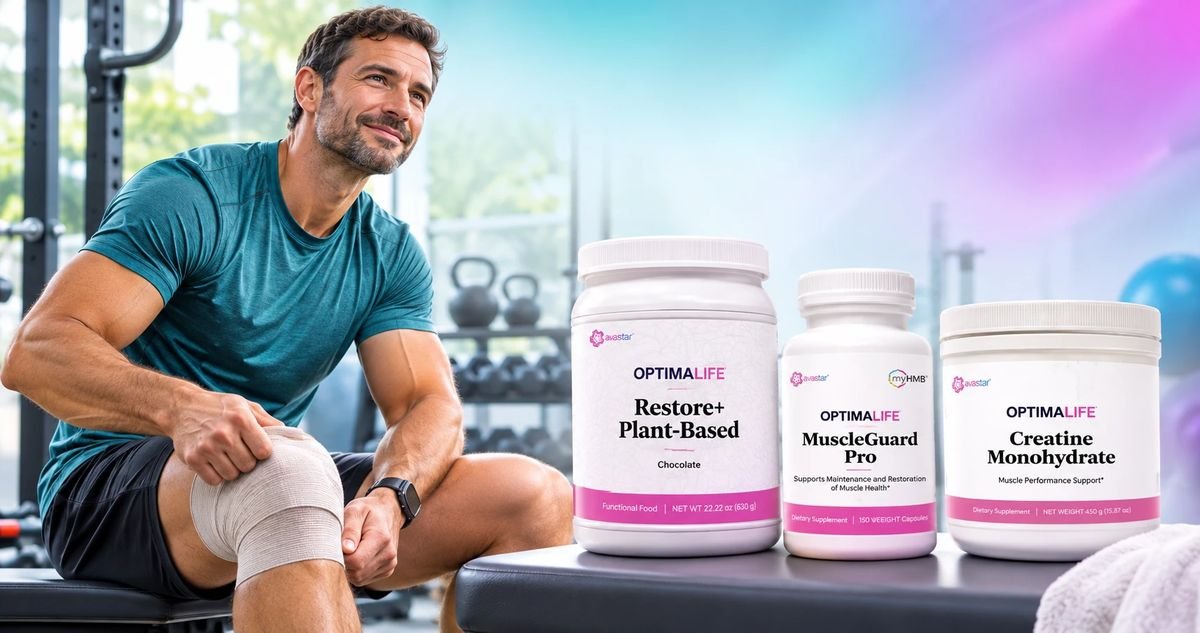
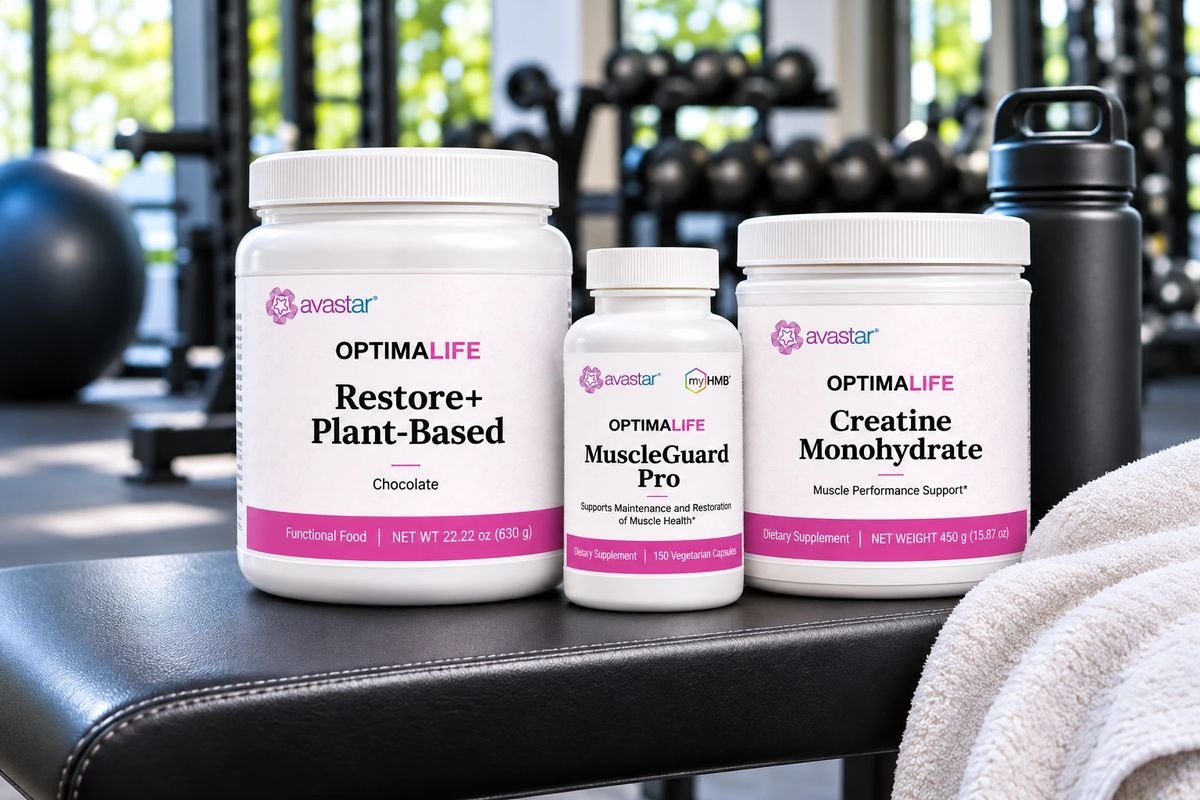
As a clinical member of Avastar® Health Systems, our sister brand for supplements, we can point patients who want help meeting their nutrition goals to three products built around muscle and recovery. Each one is described below using Avastar’s own product information.
| Product | Key ingredients (per Avastar) | What Avastar designed it to support |
|---|---|---|
| Restore+ Plant-Based | Pea and rice protein, a fiber complex (inulin and oat fiber), glycine, taurine and L-glutamine; free of gluten, dairy and soy | Protein intake, lean body mass and recovery |
| MuscleGuard Pro | HMB (a natural metabolite of leucine) and vitamin D; formulated without gluten, dairy or soy | Muscle health, strength and recovery after exercise |
| Creatine Monohydrate | Pure micronized creatine monohydrate; formulated without gluten, soy or dairy | Muscle performance alongside exercise, and lean muscle |
Because Avastar describes creatine as supporting muscle performance when combined with exercise, it fits most naturally once you are back to strength-based rehab or training. Talk with our team before adding any supplement, especially if you are pregnant or nursing, have a medical condition or take medications.
These statements have not been evaluated by the Food and Drug Administration. These products are not intended to diagnose, treat, cure, or prevent any disease.
Muscle Atrophy After Surgery: Getting Your Strength Back
Muscle atrophy after surgery follows the same pattern as any injury: the repaired area is protected, so its muscles work less for a while. Rebuilding that strength is part of recovery. Our ACL reconstruction recovery guide explains that rebuilding quad and hamstring strength is not optional, because the muscles around the knee protect the new graft during the return to activity.
Many of the repairs our team performs, including rotator cuff repair, meniscus repair and ACL reconstruction, are done through small incisions with arthroscopic surgery, an approach designed to reduce recovery time and discomfort.
For joint-specific detail, including muscle loss after knee surgery, see our guides to rotator cuff surgery recovery and arthroscopic knee surgery recovery.
How Our Sports Medicine Team Helps You Stay Strong
Our sports medicine team diagnoses and treats sports injuries using both non-operative and operative approaches, with the goal of helping you heal, regain strength and flexibility, and return to the activities you care about. Rehabilitation is personalized and focused on strength, mobility and function.
We treat the injuries that most often sideline active patients, from rotator cuff and ACL tears to ankle sprains and hamstring strains, and post-surgical rehabilitation is one of our core focus areas.
Recovery is not one thing. It is a system. Our care follows The BioMastery™ Philosophy, developed by Avastar® Health Systems and adopted by our practice, which organizes health around how the body heals: regenerative medicine and biological repair, movement and structural longevity, metabolic health, cognitive reserve, and recovery and adaptation. Protecting and rebuilding muscle after an injury draws on several of those pillars at once, so a plan may include one or more of these options:
- Regenerative medicine (PRP): Platelet-rich plasma (PRP) therapy uses a concentrate of platelets from your own blood to support the body’s natural healing response in tendons, ligaments, and joints.
- Shockwave therapy: A non-surgical option for stubborn tendon and soft-tissue pain that uses the body’s intrinsic repair mechanisms to help alleviate pain and promote healing. Learn more on our pain management page.
- IV therapy: Our BioMastery™ IV infusions include OrthoPrime™ for patients preparing for an orthopedic or regenerative procedure and RecoveryShield™ for the weeks after one, used as support alongside rehabilitation rather than a cure.
- Sports medicine expertise: Care is led by Patrick Tyrance, MD, an orthopedic surgeon and former NCAA Academic All-American linebacker and NFL draft pick. When surgery is the right answer, minimally invasive arthroscopic techniques are part of our care.
Regulatory note: PRP is not FDA-approved for any specific orthopedic condition. The FDA has cleared systems that prepare PRP, and using it as an in-office injection is considered off-label, as a review in the Journal of Knee Surgery explains. In Florida, PRP is offered legally with required disclosures. IV vitamin and nutrient infusions are not FDA-approved to treat any medical condition. Results vary by patient.
The Bottom Line on Muscle Atrophy After Injury
Muscle atrophy after injury starts early, but much of that strength can be rebuilt. Following your rehab plan, staying active where you safely can and eating enough protein give your muscles a better chance to hold on to their strength while you heal.
If an injury has you sidelined, schedule a visit with Tyrance Orthopedics & Sports Medicine and let our team help you protect your strength from day one.
Request a ConsultationFrequently Asked Questions

Patrick Tyrance, MD
An orthopedic surgeon and former NCAA Academic All-American linebacker and NFL draft pick. Having competed at the highest level, he understands what it takes to get patients back to what they love — with a focus on regenerative, minimally invasive care.
- Practice: Delray Beach, FL
- Profile: About Patrick Tyrance, MD
- LinkedIn: Patrick Tyrance, MD
- [1]Lepley et al., a review of muscle atrophy after ACL injury in Sports Health (2020). pmc.ncbi.nlm.nih.gov/articles/PMC7785904Sports Health
- [2]Hardy et al., the time course of disuse muscle atrophy of the lower limb, J Cachexia Sarcopenia Muscle (2022). pmc.ncbi.nlm.nih.gov/articles/PMC9745468JCSM
- [3]Marshall et al., nutritional strategies to offset disuse-induced muscle atrophy in older adults, Nutrients (2020). pmc.ncbi.nlm.nih.gov/articles/PMC7284346Nutrients