
Summary: Equestrian fitness, meaning the strength, mobility, and conditioning that support riding, plays a direct role in preventing the overuse injuries common in the saddle. Tyrance Orthopedics & Sports Medicine takes a rider-first approach to injury prevention and performance, and offers non-surgical options like Shockwave Therapy, PRP, BMAC, and Traumeel for riders who need extra support along the way.
Table of Contents
- Why Equestrian Fitness Matters for Injury Prevention
- Common Overuse Patterns That Better Conditioning Can Help Prevent
- Building a Rider-First Approach to Strength and Resilience
- When Fitness Isn't Enough: Non-Surgical Support for Riders
- How This Fits Into a Rider's Broader Orthopedic Care
- Frequently Asked Questions
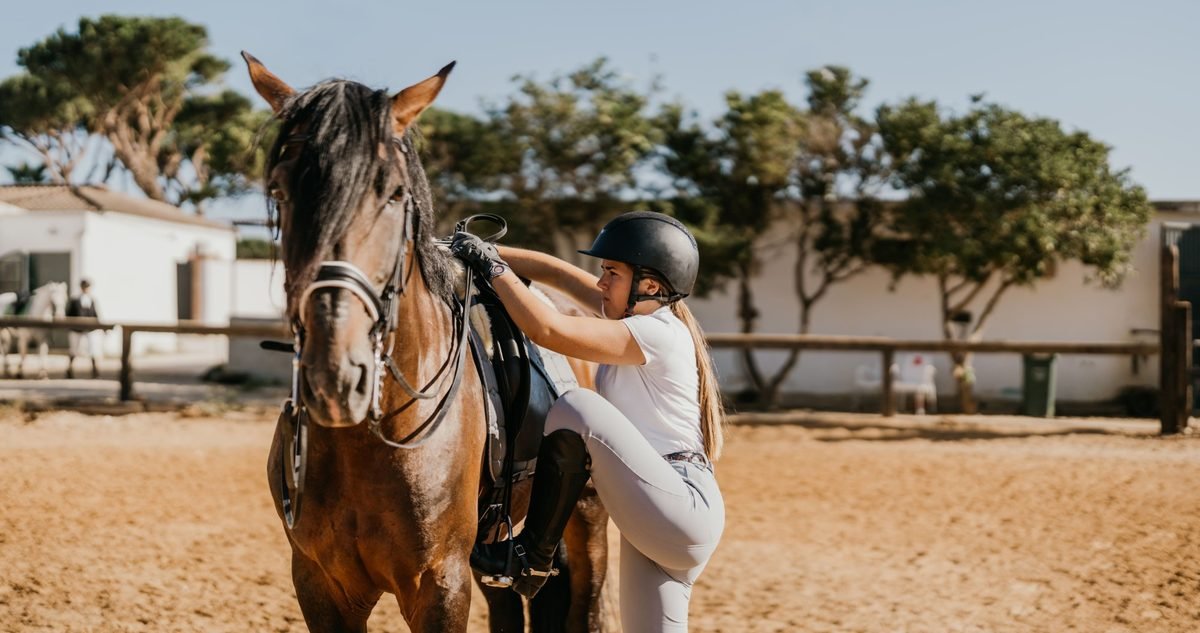
With the fall riding season approaching, it's a good time to make sure pain or old injuries aren't what keeps a rider out of the saddle once things pick back up. Equestrian fitness rarely gets the same attention as tack, technique, or the horse's own conditioning, yet it plays a direct role in how well a rider holds up over a season of jumps, dressage tests, or long trail rides.
Strength, mobility, and general conditioning affect posture in the saddle, control through the reins and legs, and how quickly a rider recovers after a demanding ride. This post looks at why equestrian fitness matters for injury prevention, which overuse patterns tend to show up when conditioning falls behind the demands of riding, and how Tyrance Orthopedics & Sports Medicine supports riders with a rider-first approach to prevention, performance, and non-surgical care when extra support is needed.
Why Equestrian Fitness Matters for Injury Prevention
Equestrian fitness, the strength, mobility, and conditioning a rider brings into the saddle, directly affects how much stress the joints, tendons, and muscles absorb during a ride. Riders with better overall conditioning tend to fatigue less quickly, which matters because fatigue is often when form breaks down and overuse injuries start to build.
Riding asks the body to hold a stable core, absorb repeated impact through the hips and knees, and maintain a steady hand and arm position, all at once, for the length of a lesson, hack, or competition round. Deficiencies in strength or mobility anywhere in that chain tend to show up as strain somewhere else. Mobility specifically is its own piece of the picture, and the role mobility plays in equestrian sports is covered in more depth elsewhere on the site.
Common Overuse Patterns That Better Conditioning Can Help Prevent
Riders who go into the saddle undertrained tend to develop a handful of recognizable overuse patterns. None of these are unique to elite competitors. They show up just as often in recreational and weekend riders who ride less consistently.
| Overuse Pattern | Where Conditioning Gaps Show Up | Why It Matters |
|---|---|---|
| Hip and low back fatigue | Core and hip stabilizer weakness | Core strength helps maintain a stable seat and absorb impact through the hips |
| Knee strain | Limited lower-body mobility and control | Reduced stability increases stress on the knee during mounting, posting, and jumps |
| Shoulder and upper-back tension | Weak scapular and postural muscles | Poor posture in the saddle adds strain to the shoulders and neck over a long ride |
| Grip and forearm fatigue | Limited hand and forearm endurance | A fatigued grip changes rein contact and can contribute to hand and wrist strain |
Building a Rider-First Approach to Strength and Resilience
A rider-first approach to equestrian fitness starts with the demands of the discipline itself, since jumping, dressage, and trail riding load the body differently even though all three depend on the same core stability and grip endurance.
This is the same rider-first thinking behind our equestrian sports medicine program, which considers jumping, dressage, and trail riding as distinct demands on the body rather than treating every rider the same way. Addressing strength and mobility gaps before they become injuries is the core of injury prevention, and building resilience over time, rather than only reacting once pain appears, supports both comfort in the saddle and performance during competition.
At Tyrance Orthopedics & Sports Medicine, that approach comes down to four things.
Rider-First Understanding
Care shaped around the demands of jumping, dressage, and trail riding.
Injury Prevention
We address deficiencies before they take you out of the saddle.
Performance Optimization
Build strength, mobility, and resilience, in and out of the saddle.
Non-Surgical Recovery
Get back to riding sooner with regenerative, non-surgical options.
When Fitness Isn't Enough: Non-Surgical Support for Riders
Even with solid conditioning, riders sometimes develop pain or inflammation that fitness alone will not resolve. For those situations, Tyrance Orthopedics & Sports Medicine offers several non-surgical options rather than moving straight to surgery.
Shockwave Therapy uses focused acoustic waves to support healing in tendons and other soft tissue, and, as covered in more depth in our overview of shockwave therapy in orthopedics, it is increasingly discussed for an emerging role in injury prevention as well as treatment. PRP, meanwhile, uses concentrated platelets from a rider's own blood and is discussed further in our piece on PRP healing in sports medicine, particularly for tendon and ligament injuries common among active patients.
| Option | What It Is | How It Supports Riders |
|---|---|---|
| Shockwave Therapy | Non-invasive acoustic wave treatment for tendon and soft-tissue pain | Supports tissue healing and has an emerging role in injury prevention |
| PRP (Platelet-Rich Plasma) | Injection using concentrated platelets from the rider's own blood | Used for tendon, ligament, and soft-tissue injuries common in active riders |
| Traumeel | Homeopathic, plant-based injectable (arnica, belladonna, echinacea) | A natural alternative to cortisone or NSAIDs for joint and soft-tissue pain |
| BMAC (Bone Marrow Aspirate Concentrate) | Regenerative injection using cells extracted from the rider's own bone marrow | Supports tissue repair and joint function for joint pain, arthritis, and tissue injuries |
Traumeel is offered as a natural alternative to cortisone or NSAIDs for joint and soft-tissue pain, and is one of several non-surgical options available through our pain management program.
BMAC (Bone Marrow Aspirate Concentrate) is another option riders may come across, using cells drawn from a patient's own bone marrow to support tissue repair and joint function. Shockwave, PRP, BMAC, and Traumeel are all part of our broader regenerative medicine program, which your provider can walk you through if fitness alone has not fully resolved your symptoms.
“As a skeptic who hesitates to try new things, I was pleasantly surprised by the effectiveness of Traumeel and shockwave therapy. If they can work for someone like me, they could be beneficial for you too, whether you're a rider or an athlete in any sport suffering from joint pain.”
Leah Jeffrey, Brookview Dressage
How This Fits Into a Rider's Broader Orthopedic Care
Equestrian fitness, injury prevention, and non-surgical treatment work together rather than as separate tracks. A rider who builds strength and mobility reduces injury risk, and a rider who develops an issue despite good conditioning still has non-surgical options before surgery becomes the conversation.
Considering all three together, rather than waiting for pain to force the issue, is the foundation of a rider-first approach to orthopedic care.
“We have the ability to reclaim and maintain the mental and physical vitality we had in our youth. Your health is wealth!”
Patrick H. Tyrance Jr., MD
Curious whether your current training is supporting or working against your riding?
Schedule a consultationwith Tyrance Orthopedics & Sports Medicine to talk through a rider-first plan.
Frequently Asked Questions

Dr. Patrick H. Tyrance Jr., MD
An orthopedic surgeon and former NCAA Academic All-American linebacker and NFL draft pick. Having competed at the highest level, he understands what it takes to get patients back to what they love — with a focus on regenerative, minimally invasive care.
- Practice: Delray Beach, FL
- Profile: About Dr. Tyrance